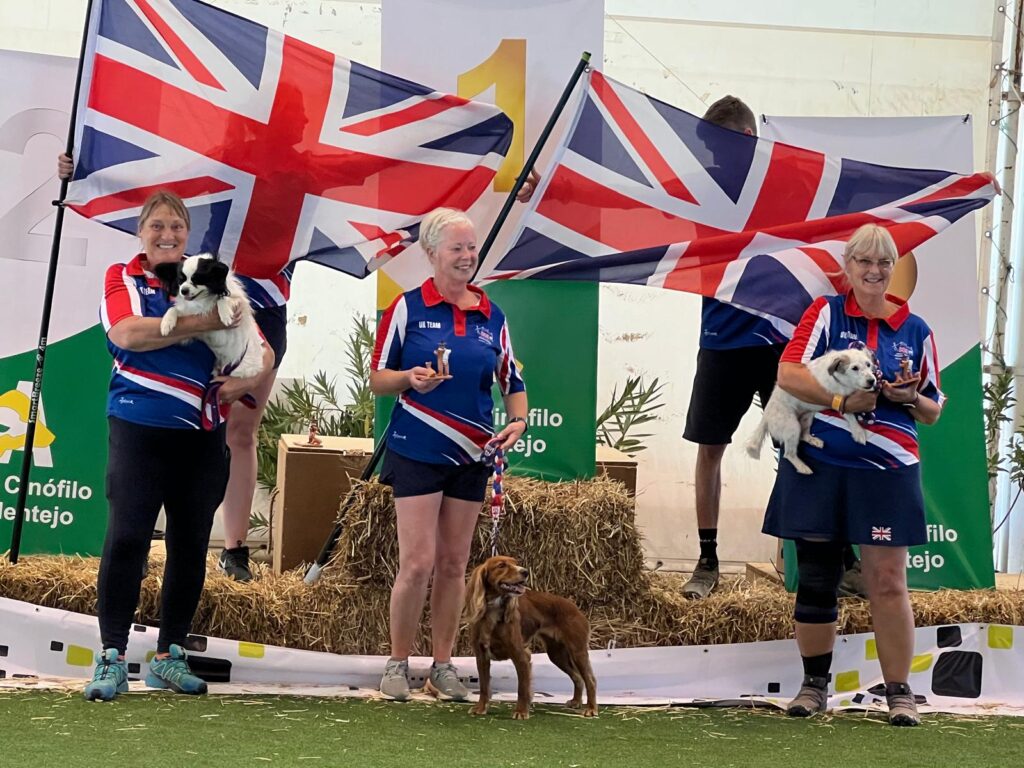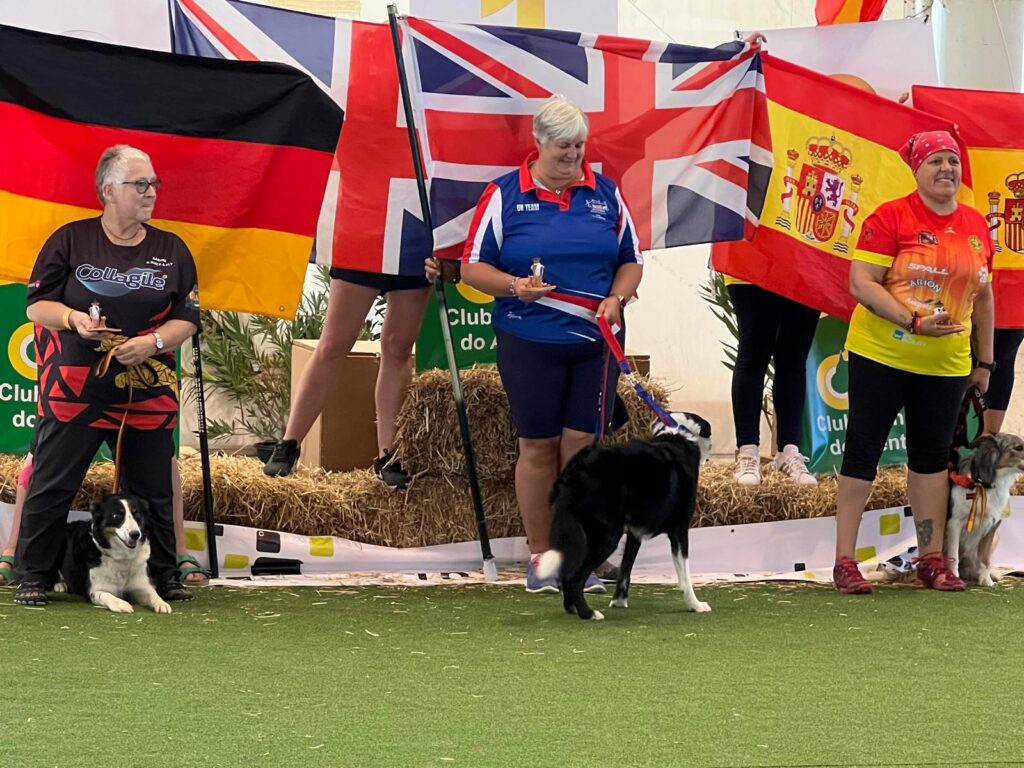
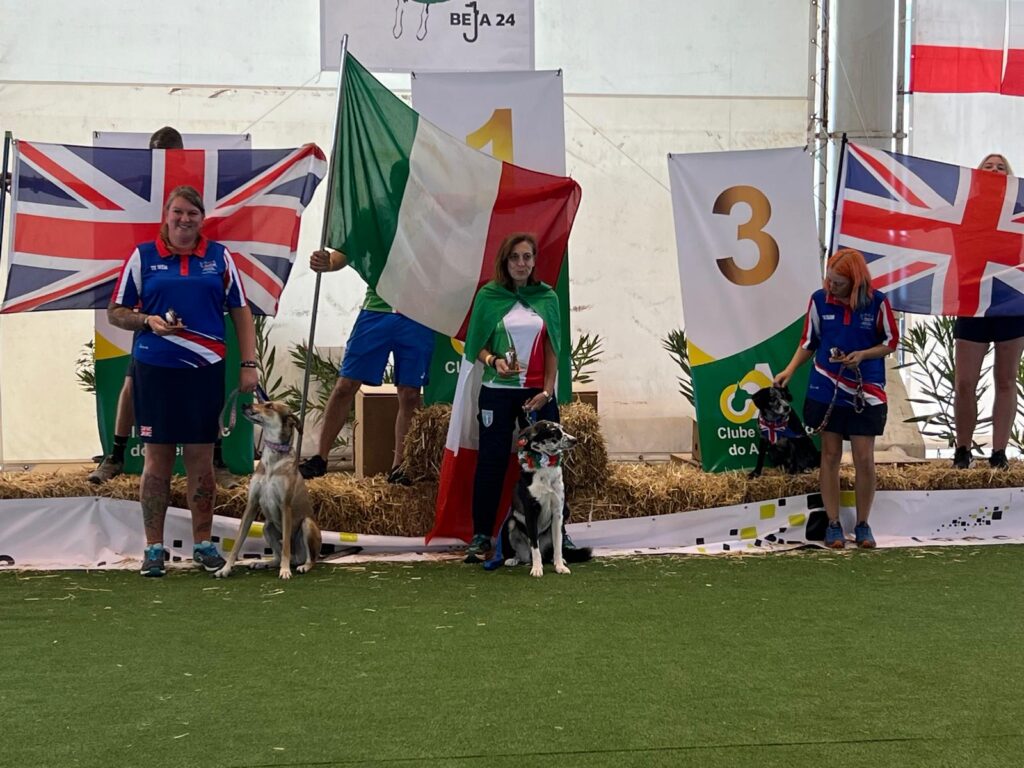
Our UK PAWC Team has grown so much in the past 10 years. In Italy in 2014, there was only around 5 PAWC UK team members. In 2018 when the UK last hosted the championships, we had a lot more PAWC members with it being in this country but in 2025 we competed in Italy with 20+ dogs in our PAWC Team.
Entries to the 2026 championships will be a lot higher than normal due to the event being in the UK again but we regularly have around 20+ dogs in the championships each year at locations around Europe. Some of our PAWC Team members will have problems travelling which is the reason the UK hosting of 2026 will be our biggest PAWC team to date and could reach the heights of between 40 – 60+ dogs!
PAWC is a unique event in the agility world and very humbling to observe. There are 7 different groups in PAWC which cover different levels of mobility.
The 7 Groups are as follows:
Group 1 – Participants with the aid of a battery-powered vehicle
(Such as an electric wheelchair, a scooter).
Group 2 – Participants with a manually powered vehicle (wheelchair).
Group 3 – Participants which are moderately disturbed as a result of their disability in the quality of walking (compared to a non disabled person).
Group 4 – Participants who are highly disturbed by their disability in the quality of walking.
Group 5 – Participants in which the quality of walking is greatly disturbed by their disability.
Group 6 – Participants in which the main problem is in an area of the body that does NOT concern to move, BUT are clearly at a disadvantage compared to a non disabled person (eg vision).
Group 7 – Participants who have a mental disability as a result of the disability. In consultation with the contact of PAWC they can use an accompanying person on the course.